
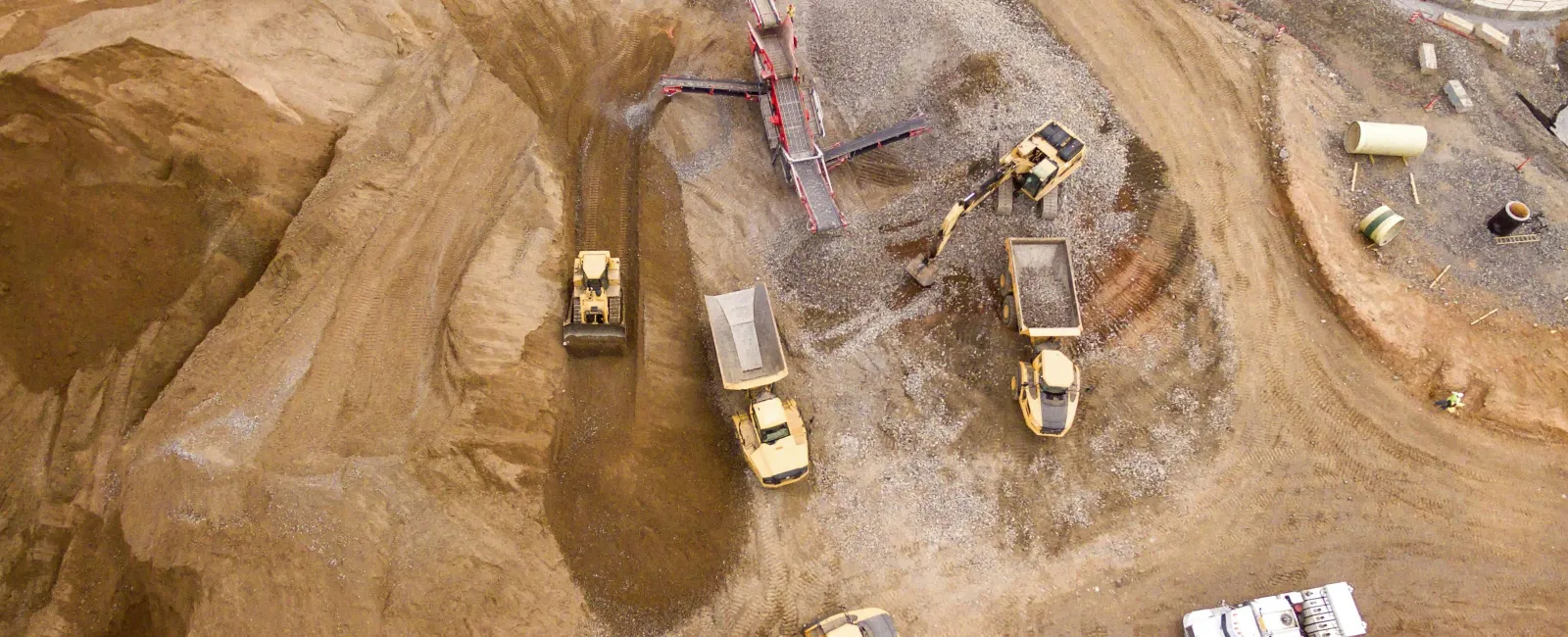
Not every site comes with soil ready for building. Across the Southeast, commercial projects routinely
encounter high-plasticity clays that swell and shrink with moisture, soft
organic soils near coastal areas and river corridors, loose sands with inadequate
bearing capacity, and fill areas with variable compaction history. Building
directly on these materials without treatment risks foundation settlement,
pavement failure, and structural distress.
Soil stabilization is the engineering process of improving the properties of weak or problematic soils to make them suitable for construction. For commercial developers, contractors, and property owners in the Southeast, soil stabilization is often not optional: it is the engineering solution that makes a marginal site buildable, and the geotechnical investigation that characterizes the site is what determines which method is appropriate.
What Is Soil Stabilization?
Soil stabilization encompasses
any technique that alters the engineering properties of in-situ or imported
soils to achieve a desired performance level. The goal is typically one or more
of the following: increasing bearing capacity so the soil can support
structural loads without excessive settlement; reducing plasticity in expansive
clays so they do not swell and shrink with seasonal moisture changes; improving
workability so that earthwork can proceed in wet or difficult conditions;
reducing permeability to control water migration through embankments,
subgrades, and foundation zones.
Stabilization can be accomplished mechanically, chemically, or through a combination of both. The appropriate method depends on the soil type, the project's engineering requirements, the required treatment depth, site access, schedule constraints, and cost. Selecting the wrong method for a soil type, or using the right method at the wrong dosage rate, can yield results worse than doing nothing at all. This is why soil stabilization design is a geotechnical engineering function, not a contractor decision made in the field.
Primary Soil Stabilization Methods and Materials
The table below summarizes the six most commonly used soil stabilization methods in commercial construction, including how each works, what soil types it is best suited for, and its key advantages. NOVA's geotechnical engineering team evaluates all applicable methods during the design phase and recommends the approach that best fits the site conditions and project constraints.
|
Method |
How It Works |
Best Soil Application |
Key Advantages |
|
Lime
Treatment |
Cation
exchange and pozzolanic reactions reduce plasticity; improve strength and
workability |
High-plasticity
clays (PI greater than 10); expansive subgrade soils |
Immediate
workability; long-term strength gain; proven in Southeast soils |
|
Cement
Stabilization |
Portland
cement hydration binds soil particles; increases compressive strength and
stiffness |
Sandy,
coarse-grained soils; low-plasticity soils (PI less than 10) |
High
early strength; effective for base course and subgrade |
|
Fly
Ash Stabilization |
Pozzolanic
reactions with lime or moisture improve strength; can replace or supplement
lime |
Clays
and silts; effective with self-cementing Class C fly ash |
Sustainable
use of industrial byproduct; cost-effective at scale |
|
Mechanical
Stabilization |
Blending,
compaction, or reinforcement alter gradation and density without chemical
additives |
Granular
soils; subgrade with marginal bearing capacity |
No
chemical additives; applicable to wide range of soil types |
|
Chemical
Grouting |
Injected
grouts penetrate soil pores and solidify, improving strength and reducing
permeability |
Loose
sands; targeted subsurface zones; limited-access conditions |
Minimally
disruptive; precise treatment area control |
|
Deep
Soil Mixing |
In-situ
mixing of soil with binder (cement, lime) using augers to create treated
columns or panels |
Soft
clays; organic soils; deep treatment zones |
No excavation; effective in soft coastal soils common in Southeast |
Lime Treatment: The Standard for High-Plasticity Clays
Lime treatment is the most
widely used stabilization method for cohesive, high-plasticity clay soils in
the Southeast, and for good reason. When hydrated lime is mixed into clay soil,
two reactions occur. The first is immediate: calcium ions from the lime
exchange with ions on the clay particle surfaces, reducing the soil's affinity
for water and immediately lowering its plasticity index. The result is a soil
that is drier, less sticky, and far easier to work with, often within hours of
treatment.
The second reaction is slower. Over days to weeks, pozzolanic reactions between the lime, silica, and alumina in the clay form calcium silicate and calcium aluminate hydrates: the same cementitious compounds that give Portland cement its strength. This
reaction permanently improves the soil's long-term strength and stiffness. A
properly lime-treated subgrade in Georgia's Piedmont soils or Florida's coastal
plain clays can achieve California Bearing Ratio (CBR) values that are multiple times higher than those of untreated material.
Lime treatment is generally
appropriate for soils with a plasticity index (PI) greater than 10. It is less
effective on granular, low-plasticity soils, where cement is typically the
better choice.
Cement Stabilization: Best for Granular and Low-Plasticity Soils
Portland cement stabilization
works through direct hydration: cement and water react to form binding
compounds that physically link soil particles together, increasing compressive
strength and stiffness. Unlike lime, cement does not reduce plasticity through
ion exchange; it masks the effect of clay minerals rather than chemically
modifying them. This distinction matters enormously for method selection.
Cement is most effective in
granular, coarse-grained soils with a PI of 10 or less. In high-plasticity
clays, cement stabilization can produce adequate early strength while leaving
the underlying plasticity problem unaddressed. When moisture penetrates cracks
in the cement-treated layer, which is common because cement-stabilized soils
are prone to shrinkage cracking, the untreated clay beneath can still swell and
destabilize the pavement or foundation above. This is a well-documented failure
mode and a primary reason geotechnical engineers specify lime for plastic clays
and cement for granular soils, not the other way around.
Fly Ash Stabilization
Coal fly ash, particularly
self-cementing Class C fly ash from subbituminous and lignite coal combustion,
contains sufficient free lime to react pozzolanically with soil, eliminating the need for a separate lime source. When mixed with moist soil,
Class C fly ash hydrates and forms cementitious compounds that improve strength
and reduce plasticity over time. Class F fly ash, derived from bituminous coal,
has lower free lime content and typically requires lime activation to develop
pozzolanic strength.
Fly ash is a sustainable
stabilization option that repurposes an industrial byproduct that would
otherwise require disposal. It is cost-competitive with lime and cement at
scale and particularly useful for highway and large-area earthwork projects where material costs are a significant factor.
Mechanical Stabilization
Mechanical stabilization
improves soil properties through physical means rather than chemical addition.
The most common methods include compaction (densifying the soil by reducing
void ratio through applied load and vibration), blending (mixing weak soil with
coarser, higher-quality material to improve gradation and drainage), and
geosynthetic reinforcement (incorporating geogrid or geotextile layers to
distribute load and improve subgrade performance without altering the soil's
chemistry).
Mechanical stabilization is
appropriate when the soil's plasticity is not the primary problem, when
chemical admixtures are not cost-effective, or when project constraints limit
the use of specialized equipment. It is the oldest and simplest form of stabilization
and remains widely used as a first-line treatment before more specialized
chemical methods are considered.
Deep Soil Mixing and Chemical Grouting
For deep treatment zones, limited-access conditions, or soft soils that cannot be excavated and replaced, in-situ techniques such as deep soil mixing and chemical grouting provide stabilization without removing the problematic material. Deep soil mixing uses large-diameter augers to blend in-situ soil with injected cementitious binder, creating treated columns or panels that improve bearing capacity and reduce settlement. Chemical grouting injects low-viscosity grout solutions into the soil pore network to cement particles in place. Both methods require specialized equipment and careful design, but they expand the range of conditions where geotechnical stabilization is feasible without major earthwork.
How Soil Type Determines Method Selection
The single most important input
to soil stabilization design is a thorough understanding of the soil's physical
and chemical properties. Key parameters that drive method selection include:
- Plasticity index (PI): The difference between a soil's liquid limit and plastic limit. High PI (greater than 25) soils are typically candidates for lime treatment; low PI soils (less than 10) are better candidates for cement
- Gradation: The distribution of particle sizes. Coarse-grained, granular soils respond well to cement and mechanical methods; fine-grained soils with significant clay content require chemical stabilization
- Organic content: Soils with organic matter above approximately 1 to 2 percent can interfere with lime and cement reactions, significantly reducing treatment effectiveness. High-organic soils may require removal or different treatment approaches
- Sulfate content: Soils containing soluble sulfates can react with lime or cement to form expansive minerals, particularly ettringite, which can cause heave and structural damage. Sulfate testing is essential before specifying lime or cement treatment in susceptible areas
- Moisture content: Soil moisture at the time of treatment affects mixing, compaction, and reaction efficiency. Pre-treatment moisture conditioning may be required to achieve optimal treatment results
These parameters are determined through laboratory testing on samples collected during the geotechnical site investigation. The testing program informs both method selection and dosage rates, which must be confirmed through mix design testing before field application begins.
Soil Stabilization in the Southeast: Regional Factors
The Southeast's geology and
climate create specific soil stabilization challenges that differ from those of other
regions.
High-Plasticity Piedmont Clays
Georgia's Piedmont region, which covers the Atlanta metropolitan area and surrounding counties, is underlain by residual soils formed from the weathering of granite, gneiss, and schist.
These soils include weathered rock zones and plastic clay profiles, with PI values frequently exceeding 30-40. They are highly susceptible to strength
loss when wet and to seasonal volume changes driven by moisture fluctuations. Lime
treatment is the standard approach for subgrade stabilization in these soils,
and it has a long track record in Georgia DOT highway construction that
directly informs commercial project practice.
Soft Coastal Soils
The coastal plains of Georgia,
South Carolina, and Florida contain deposits of soft, compressible clays,
organic soils, and silts with very low bearing capacity and high settlement
potential. These conditions are particularly challenging because the soils are
often saturated and near the surface. Deep soil mixing and aggregate column
methods are frequently evaluated for these conditions, where conventional lime
or cement surface mixing is impractical due to depth and moisture constraints.
Florida Limestone and Sand
Florida's geology is dominated
by limestone and quartz sand, with limited clay content in many areas. Cement
stabilization of sandy subgrades is common for roadway and parking lot
construction. However, Florida's high groundwater table and the prevalence of
organic soils near the surface add complexity, and organic content testing is an
essential step before specifying any chemical stabilization in these
conditions.
Sulfate Awareness
Sulfate-bearing soils are present in portions of the Southeast, particularly in some coastal and former industrial areas. The risk of ettringite-induced heave from lime or cement stabilization of high-sulfate soils is real and well-documented. NOVA's geotechnical laboratory testing program includes sulfate screening as a standard component of stabilization design work in areas where sulfate content is a concern.
From Investigation to Implementation: The Stabilization Design Process
Effective soil stabilization is
not a field product selection decision; it is an engineering design
process that begins with a subsurface investigation and culminates in verified
construction quality.
Step 1: Geotechnical Investigation
Soil borings, test pits, and
laboratory testing establish the soil profile, identify problematic layers, and
determine the key properties that drive stabilization design: PI, gradation,
organic content, sulfate content, moisture content, and in-situ strength. This
investigation is the foundation of every stabilization recommendation NOVA
makes. For more on the geotechnical investigation process, see our post on what is a soil boring.
Step 2: Mix Design Testing
Once the stabilization method is
selected, laboratory mix design testing determines the optimum type and dosage
rate of the stabilizing agent. For lime and cement stabilization, unconfined
compressive strength specimens are prepared and cured at multiple additive
percentages. The dosage that achieves the specified strength at the lowest cost becomes the design specification.
Step 3: Field Application and Compaction
The stabilizing agent is applied
to the prepared subgrade, mixed to the specified depth using
reclaimer/stabilizer equipment or rotary tillers, and compacted to the required
density. Lime treatment typically requires a mellowing period of 24 to 48 hours
between initial mixing and final compaction to allow the reduction in plasticity to take effect before compaction.
Step 4: Quality Verification
Compaction testing and, for chemical stabilization, strength sampling verify that the treated layer meets the design specification. Construction materials testing during and after stabilization is essential to confirm that the treatment achieved its intended result before the overlying pavement or structure is placed. Discovering inadequate treatment after overlying construction is complete is costly and avoidable with proper inspection and testing during construction.
Need Geotechnical Engineering Support for a Soil Stabilization Project?NOVA's geotechnical engineers
have designed and overseen soil stabilization programs for commercial
projects across Georgia, Florida, North Carolina, and South Carolina since
1996. We provide the subsurface investigation, lab testing, and engineering
recommendations needed to select the right method for your site. Learn more: usanova.com/what-we-do/geotechnical-engineering |