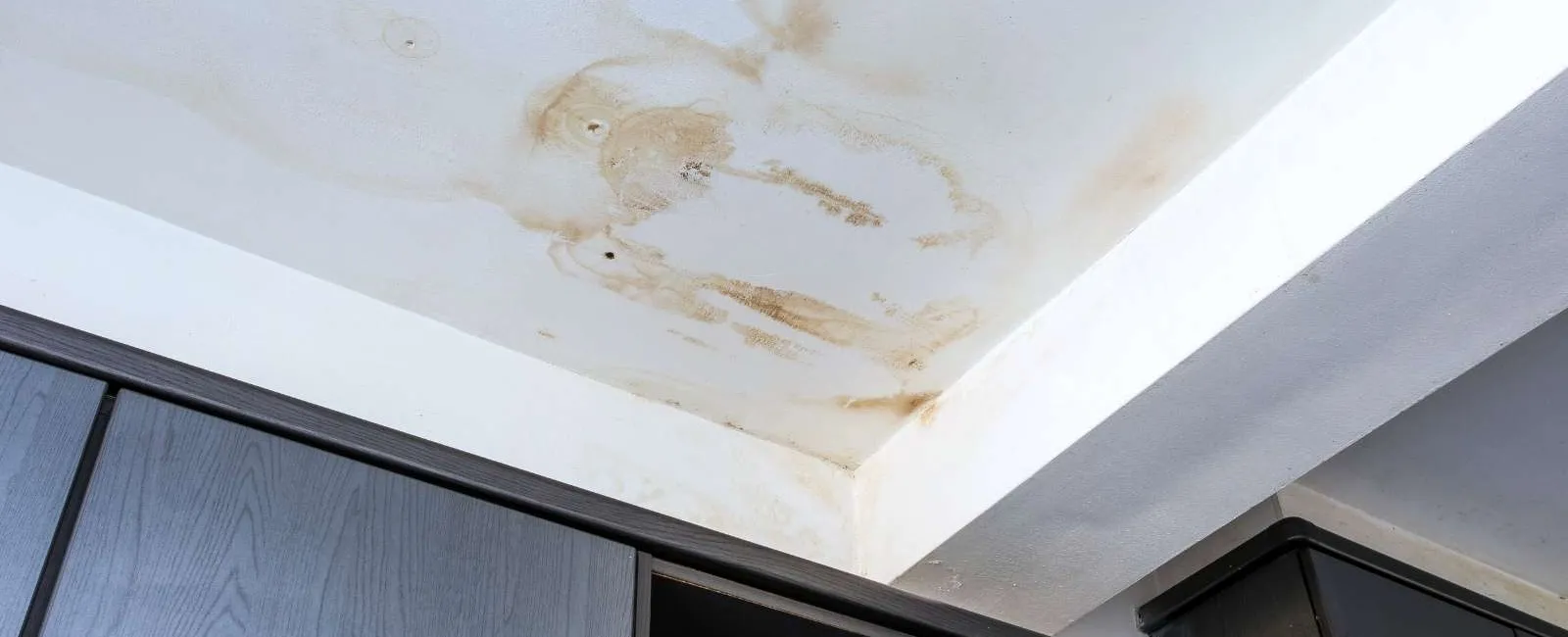
A stain on the ceiling that appears after rain, a damp carpet near an exterior wall with no obvious source, and paint bubbling on an interior gypsum board surface in a space that was dry last year. These are the visible signals of water intrusion: moisture entering a
building through the enclosure and reaching surfaces and assemblies where it
was not intended to go.
Water intrusion in commercial buildings is one of the most common, costly, and technically complex problems property owners, managers, and insurers encounter. It generates tenant complaints, accelerates material deterioration, creates mold conditions, drives insurance claims, and supports construction defect litigation. And it is frequently misdiagnosed: the visible damage almost always appears elsewhere than the actual entry point, which is why professional investigation, rather than contractor patching, is often the right first response.
What Is Water Intrusion?
Water intrusion refers to the
uncontrolled entry of liquid water, water vapor, or moisture into a building
through its enclosure: the system of roofing, walls, windows, doors, and
below-grade assemblies that is designed to separate the interior from the exterior
environment.
The term is used in engineering,
insurance, and legal contexts to describe a range of conditions: active leaking
during rain events, slow capillary absorption through masonry, condensation
forming inside wall cavities, and groundwater seeping through foundation walls.
All of these are forms of water intrusion, each with a different mechanism, visual signature, and diagnostic and remediation
approach.
Water intrusion differs from a plumbing leak in that it involves the building enclosure rather than the mechanical systems. A burst pipe is a plumbing failure. Water entering through a failed window sealant, a compromised roof membrane, or an improperly detailed wall-to-roof transition is water intrusion. The distinction matters because the responsible parties, the applicable insurance coverage, and the investigation methodology are different. NOVA's building enclosure consulting and forensic engineering practices focus specifically on enclosure-related water intrusion in commercial, institutional, and multifamily properties.
The Six Pathways of Water Intrusion in Commercial Buildings
Water enters buildings through six distinct mechanisms, each driven by different physical forces and requiring different investigative and remediation approaches. Correctly identifying which pathway is active on a given project is the foundation of effective diagnosis.
|
Pathway |
Mechanism |
Common Entry Points |
Notes |
|
Bulk
Water / Rain Penetration |
Direct
entry through failed joints, gaps, or breaches in the building enclosure
under wind-driven rain |
Failed
sealant, improper flashing, open joints in cladding, damaged membrane |
Most
common mode in Southeast coastal markets |
|
Capillary
Absorption |
Moisture
drawn into porous materials against gravity through surface tension |
Masonry,
concrete, grout joints, untreated substrate materials |
Accumulates
slowly; often misidentified as a leak |
|
Air
Transport |
Humid
air carries moisture vapor through gaps in the air barrier; condenses on
cooler surfaces inside the assembly |
Incomplete
air barriers, unsealed penetrations, pressure differentials |
Primary
moisture mechanism in hot-humid climates |
|
Vapor
Diffusion |
Moisture
vapor moves through materials from high to low vapor pressure zones,
independent of air movement |
Permeable
wall assemblies, inadequate vapor retarder placement |
Slower
than air transport; design-driven solution |
|
Condensation |
Warm
moist air contacts a surface below its dew point; moisture deposits directly
on or within the assembly |
Cold
surfaces in contact with humid interior or exterior air, thermal bridges |
Common
at window frames, metal connections, and poorly insulated assemblies |
|
Groundwater
/ Below-Grade Seepage |
Hydrostatic
pressure drives water through foundation walls, slabs, and waterproofing
system failures |
Inadequate
waterproofing, failed drainage mat, hydrostatic pressure from high water
table |
Critical for below-grade structures and basement slabs |
In practice, multiple pathways are often active simultaneously in the same building. A wall assembly may be experiencing both bulk water entry through a failed sealant joint and condensation forming on thermal bridges within the same cavity. An investigation that addresses only one pathway while missing the other will result in an incomplete repair scope and a recurring problem.
Where Water Intrusion Hides: Reading the Evidence
The most important thing to
understand about water intrusion investigations is that visible damage and the actual entry point are rarely in the same location. Water travels: it follows
gravity, capillary pathways, and pressure differentials, accumulating at low
points and in porous materials far from where it entered. A stain on a
third-floor ceiling may originate at a fifth-floor roof drain. Wet framing
inside a wall may be fed by a sealant failure at a window head several feet
above the visible damage.
Experienced investigators read
the visible evidence as a map rather than a diagnosis. Common visual indicators
and what they suggest:
Staining and Discoloration
Brown or yellow water staining
on ceilings, walls, or column covers indicates a history of moisture contact.
The shape and location of staining provide information about water pathways:
staining that follows framing lines suggests moisture traveling within the wall
cavity; staining that radiates outward from a penetration suggests that
penetration as a possible entry point. Fresh staining that appears after rain
events points toward active bulk water entry rather than vapor or condensation.
Efflorescence on Masonry
The white crystalline deposits
that appear on brick, concrete block, and concrete surfaces are efflorescence:
mineral salts dissolved in water and carried to the surface as the water
evaporates. Efflorescence is unambiguous evidence of water movement through the
masonry, though it does not by itself identify whether the source is bulk water
penetration, capillary absorption from grade, or vapor condensing within the
wall. Location and pattern narrow the possibilities.
Paint and Coating Failures
Blistering, peeling, or bubbling
paint on interior surfaces adjacent to exterior walls indicates moisture
accumulating between the substrate and the coating. This pattern is
particularly common where vapor drive pushes moisture from the exterior through
the wall assembly and condensation forms on the cooler interior surface. In the
Southeast's hot, humid climate, this mechanism is especially active during summer, when high exterior humidity drives moisture inward toward
air-conditioned interior spaces.
Mold Growth
Mold requires moisture, organic
material, and time. Its presence on interior surfaces is a reliable indicator
of persistent or recurring moisture at that location. Mold growth within wall
cavities, discovered during investigation or renovation, indicates that
moisture has been present for an extended period, long enough to support
biological growth. The presence of mold often elevates a water intrusion issue
from a building performance problem to a tenant health and legal liability concern, and it warrants professional assessment rather than surface
remediation alone.
Structural and Material Deterioration
Corroding metal components, deteriorating wood framing, spalling concrete, and delaminating finishes all indicate prolonged exposure to moisture. When structural framing members show signs of moisture damage, the scope of investigation must expand to evaluate whether structural capacity has been affected, not just to address water entry. This is particularly common in wood-framed multifamily buildings, where chronic water intrusion can cause significant deterioration of the framing before it becomes visible from interior spaces. For more on concrete damage, see What Is Concrete Spalling, and What Causes It?.
Consequences of Unaddressed Water Intrusion
The cost of water intrusion in
commercial buildings scales with the delay between onset and remediation.
Early-stage intrusion that is caught and addressed quickly may involve surface
staining, minor finish repairs, and sealant replacement. Intrusions left unaddressed for months or years result in consequences that are substantially more expensive and disruptive.
- Structural deterioration: Prolonged moisture contact corrodes embedded steel reinforcement, rots wood framing, degrades masonry mortar, and reduces concrete durability, creating structural repairs that far exceed the cost of the original enclosure remediation
- Mold contamination: Persistent moisture creates conditions for mold growth within wall and ceiling assemblies, requiring remediation that may involve demolition of finished surfaces, tenant relocation, air monitoring, and clearance testing before reoccupancy
- Energy performance degradation: Wet insulation loses its thermal resistance, increasing heating and cooling loads and operating costs in ways that persist even after the moisture source is addressed, until the insulation is replaced
- Tenant disputes and lease complications: Water intrusion affecting occupied tenant spaces generates complaints, triggers repair obligations under lease agreements, may constitute a breach of the warranty of habitability in multifamily contexts, and can support claims for rent abatement or lease termination
- Insurance claims and litigation: Water intrusion events generate property damage insurance claims, and the determination of whether damage is covered under the policy frequently turns on questions of cause and origin that require forensic engineering investigation. Construction defect claims related to water intrusion are among the most frequently litigated categories in commercial real estate
How a Water Intrusion Investigation Works
A professional water intrusion
investigation follows a structured process designed to move from observable
symptoms toward a confirmed entry point and identified cause.
Document and Records Review
The investigation begins with a
review of available construction documents, prior inspection reports, repair
history, weather data, and tenant complaint records. This pre-investigation
review identifies the building's enclosure systems, focuses field investigation
on high-risk areas, and establishes a timeline of moisture events that may
reveal patterns not visible from a single site visit.
Visual Inspection and Mapping
A systematic visual inspection
documents all observed moisture indicators: staining, efflorescence, mold,
paint failures, deterioration, and active moisture. All observed conditions are
mapped on the building floor plan and exterior elevation to establish the
spatial relationship between visible damage and possible entry locations. In
multi-story buildings, damage mapping on multiple floors often reveals vertical
pathways that point toward roof or upper-level entry.
Infrared Thermography
Infrared thermography uses a
thermal imaging camera to detect temperature differentials caused by wet
building materials. Wet insulation, wet framing, and moisture-laden substrates
all have different thermal signatures than dry materials and appear as distinct
areas in the thermal image. Infrared is particularly valuable for mapping
moisture extent within wall and ceiling assemblies without destructive
investigation, and for identifying wet areas beneath roofing membranes to guide
core sampling location.
Water Testing
When the entry point cannot be
confirmed by visual inspection and infrared alone, controlled water testing
introduces water to specific areas of the enclosure in a controlled sequence to
identify entry locations. ASTM E1105 covers laboratory and field water
penetration testing of installed fenestration products. ASTM E2128 provides a
comprehensive guide to evaluating water leakage of building walls. These
protocols apply water at specified pressures and rates to isolate entry
locations and correlate them with interior moisture response.
Intrusive Investigation and Sampling
Where testing and imaging
indicate moisture within an assembly but cannot confirm the entry mechanism,
limited intrusive investigation, including opening wall cavities, removing
roofing membrane sections, or extracting material samples for laboratory analysis,
may be required to examine concealed conditions directly. Intrusive
investigation is coordinated with building management to minimize disruption
and is limited to areas necessary to confirm investigation findings.
Report and Repair Scope
The investigation report documents methodology, observed conditions, test results, infrared findings, identified entry points, probable cause, and recommended repair scope. For insurance claims and litigation, the report provides a professional engineering opinion on cause and origin that is required for claim adjudication and legal proceedings. For property owners proceeding with repairs, the report provides the technical specifications that ensure the repair contractor addresses the actual failure mechanism rather than applying cosmetic treatments to visible symptoms. NOVA delivers water intrusion investigation reports that are formatted to support each of these downstream uses.
Water Intrusion in the Southeast: Regional Factors
The Southeast's climate and
construction environment create specific water intrusion risks that differ from those of other regions.
- Wind-driven rain intensity: Tropical storms and hurricanes generate wind-driven rain loads that far exceed what normal construction details are tested to resist. Buildings designed and constructed to minimum code standards in coastal Georgia, Florida, and the Carolinas face water intrusion risks during major storm events, even when details are properly executed
- Hot-humid climate and vapor drive: In ASHRAE Climate Zone 2, which covers most of the Southeast, exterior humidity and temperature are often higher than interior conditions during summer months. This drives moisture vapor inward through the wall assembly, increasing the risk of condensation on interior surfaces and within assemblies that lack an appropriate vapor retarder. Buildings designed for a different climate zone, or renovated to add interior air conditioning without addressing the vapor control layer, are particularly susceptible
- Aging commercial building stock: Atlanta, Charlotte, Jacksonville, and Florida's major markets contain large inventories of commercial buildings constructed in the 1960s through 1990s with sealants, membranes, and flashing systems that have exceeded their design service life. Chronic water intrusion in this inventory is common and is a primary driver of building enclosure condition assessments across the Southeast
- High groundwater in coastal and low-lying areas: The Southeast coastal plain, including much of Florida, coastal South Carolina, and coastal Georgia, features shallow groundwater that creates hydrostatic pressure on below-grade construction. Below-grade waterproofing in these markets must be designed for sustained hydrostatic conditions, not merely surface water management
Dealing with Water Intrusion in a Commercial Building?NOVA's building enclosure consultants and forensic engineers investigate water intrusion in commercial properties across Georgia, Florida, North Carolina, and South Carolina. We identify the source, document findings for insurance and legal purposes, and scope the right repair. Since 1996. |