
Every construction project
starts with a question no blueprint can answer on its own: what's actually in
the ground? Before a foundation is designed, before a slab is poured, before
earthwork begins, someone has to investigate the subsurface conditions beneath
the site.
That investigation almost always
starts with a soil boring. It's one of the most fundamental tools in geotechnical engineering, and one of the most
consequential steps a project team can take before any dirt moves.
At NOVA, we will explain what soil borings are, how the process works from setup through lab analysis in our AASHTO-accredited labs, and why the data they produce shapes decisions across foundation design, slope stability, and commercial site development.
What Is a Soil Boring?
A soil boring is a geotechnical
investigation method used to extract soil and rock samples from below the
ground surface. A drill rig advances a borehole to targeted depths while
technicians collect samples at regular intervals. Those samples are then logged
in the field and analyzed in a laboratory to characterize the subsurface
profile.
The data collected during soil
borings answers questions that visual inspection cannot:
- How deep is the load-bearing material?
- What are the soil's strength and compressibility characteristics?
- Where is the groundwater table, and how does it fluctuate seasonally?
- Is there evidence of fill, contamination, or unusual subsurface conditions?
- What foundation type is appropriate for this site and structural load?
Without this data, foundation and earthwork designs are based on assumptions. With it, licensed engineers have the factual basis to make defensible, code-compliant recommendations. It's why geotechnical investigation is almost always the first technical discipline engaged on a commercial project, not the last.
Why Soil Borings Matter for Commercial Construction
Subsurface conditions are
unpredictable. Even on sites that look uniform at the surface, soil types,
layer depths, and bearing capacities can shift significantly over short
horizontal distances. Expansive clays, organic deposits, old fill areas, or
shallow rock all carry different engineering implications, and none of them
are visible until you drill.
The consequences of skipping or
under-scoping a boring program are well documented in the industry: unexpected
settlement, structural distress, costly change orders, delayed schedules, and
in the worst cases, litigation over alleged design defects.
NOVA has been performing soil boring investigations for commercial projects across the Southeast since 1996. In that time, our geotechnical engineers have encountered the full range of regional subsurface complexity, from Piedmont residual soils in metro Atlanta to soft coastal deposits in Charleston, Fall Line transitions in Augusta and Columbia, and the limestone formations and high water tables of South Florida. The geology changes. The need for site-specific data does not.
Common Soil Boring Methods
Several drilling techniques are
used depending on site conditions, required depths, and the type of data
needed:
Auger Boring
Auger boring uses a helical
screw to advance the borehole and is well-suited for shallow investigations in
soft to medium-stiff soils. Hand augers work for shallow depths; hollow-stem
continuous flight augers are the standard tool for most commercial geotechnical
programs, allowing samplers to be advanced through the center of the auger
without collapsing the borehole.
Rotary Drilling
Rotary drilling uses a rotating
bit, often aided by drilling fluid, to cut through soil and rock. It's the
method of choice for deeper borings, rock coring, and sites with groundwater
that would otherwise collapse the borehole walls. Rotary drilling allows
continuous sampling through complex stratigraphic sequences.
Percussion / Cable Tool Drilling
This older method drops a
weighted bit repeatedly to break up hard material. Though slower than rotary
drilling, it remains effective in very hard or rocky formations where other
methods struggle to advance.
Wash Boring
Wash boring uses a water jet to loosen soil, which is then flushed to the surface. It's a preliminary method suited for soft soils and early-stage investigations, but it disturbs the sample, limiting its usefulness for detailed strength or compressibility testing.
The Soil Boring Process: Step by Step
A complete geotechnical soil boring program follows a
structured sequence. Here's how it works from mobilization through final
deliverable:
Step 1: Site Reconnaissance and Boring Layout
Before the rig arrives, the
geotechnical engineer reviews available records, topographic maps, historical
aerial photographs, prior environmental or geotechnical reports, and utility
information. Boring locations are selected to characterize the full footprint
of the proposed structure, with additional borings at areas of concentrated
load or at locations with unusual surface conditions. Utility clearance is required before any
drilling begins.
Step 2: Drilling and Sample Collection
The drill rig advances the
borehole in increments, typically collecting samples every 2.5 to 5 feet or at
changes in soil layer. Two types of samples are recovered:
- Disturbed samples: used for soil classification, grain size analysis, and Atterberg limits testing. Split-spoon samplers are standard.
- Undisturbed samples: collected using thin-walled Shelby tube samplers to preserve the natural soil structure, enabling accurate strength and compressibility testing.
Step 3: The Standard Penetration Test (SPT)
The Standard Penetration Test is
the most widely used in-situ test in geotechnical practice. A 140-pound hammer
drops 30 inches to drive a split-spoon sampler 18 inches into the soil. The
number of blows required to advance the last 12 inches, the N-value, is
recorded and corrected for hammer energy and overburden pressure. SPT N-values
directly inform bearing capacity calculations, liquefaction assessments, and
pile design.
Step 4: Groundwater Monitoring
Groundwater depth is recorded
during drilling and again after the borehole has stabilized. In some programs,
temporary piezometers or monitoring wells are installed to track seasonal
fluctuation, particularly relevant in regions like the Southeast, where water
table elevations shift significantly between wet and dry seasons.
Step 5: Field Logging
A geotechnical technician
maintains a detailed borehole log throughout the investigation, recording soil
layer depths and descriptions, sample types and recovery, SPT blow counts,
groundwater observations, and any encountered obstructions or anomalies. Accurate
field logging is the backbone of the final geotechnical report.
Step 6: Laboratory Testing
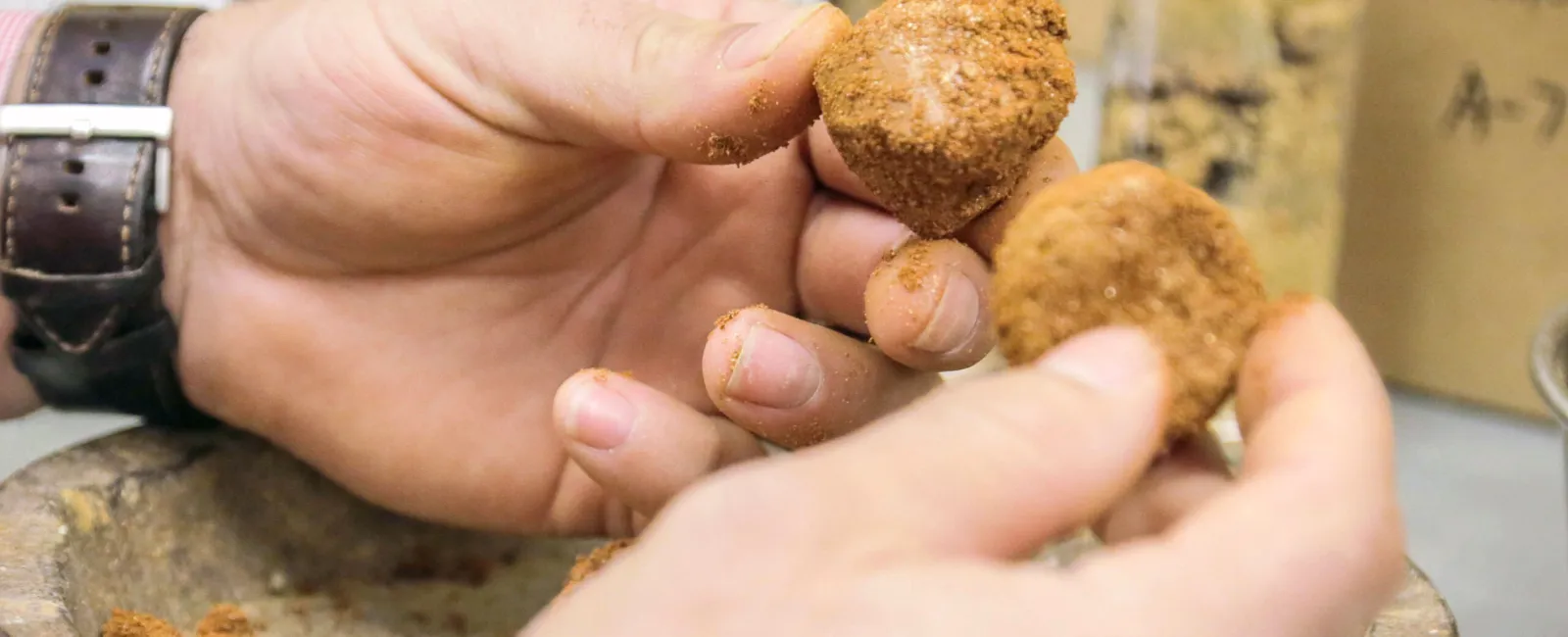
Recovered samples are transported to an accredited geotechnical laboratory, such as NOVA's AASHTO-accredited labs, for analysis. Standard tests include grain-size distribution, Atterberg limits (liquid and plastic limits), moisture content, unconfined compressive strength, consolidation, and direct shear. These results refine the subsurface model and directly inform the foundation and earthwork recommendations in the final report.
What Comes Out of a Soil Boring Program: The Geotechnical Report
The deliverable from a soil
boring program is a geotechnical engineering report, sometimes called a soils
report or geotech report. It compiles all field and laboratory data into an
engineering document that typically includes:
- Boring logs with full stratigraphic profiles and sample descriptions
- Laboratory test results with interpretation
- Groundwater depth and seasonal variability notes
- Foundation type recommendations (spread footings, mat foundations, deep piles, or drilled shafts)
- Allowable bearing capacity values for design
- Settlement estimates under anticipated structural loads
- Earthwork recommendations, including fill compaction specifications and subgrade preparation
- Liquefaction screening (required in seismically active areas or by certain lenders)
This report serves as a foundational reference document for the structural engineer, civil engineer, architect, contractor, and, often, the lender or owner's risk manager. In litigation or insurance contexts, the geotechnical report is frequently a central exhibit.
How Soil Borings Fit Into a Commercial Project
Soil borings aren't a standalone
exercise; they're the starting point for a full geotechnical engineering scope of work. The data they
produce feeds directly into:
- Foundation design: determining whether shallow footings are viable or deep foundations are required based on bearing capacity and settlement tolerance
- Slope stability analysis: characterizing soil strength parameters needed to evaluate cut slopes, embankments, and retaining structures
- Earthwork and grading design: specifying subgrade preparation, fill material suitability, and compaction requirements for graded pads and roadways
- Stormwater and drainage design: understanding infiltration rates and perched groundwater conditions that affect detention pond siting and percolation
- Environmental site assessments: Phase II investigations that use soil borings to collect samples for contamination analysis
For commercial developers, contractors, and property owners across the Southeast, commissioning a geotechnical boring program early in the project sequence is one of the highest-return investments available. The cost of discovering an adverse subsurface condition during design is a fraction of the cost of discovering it during construction, and a fraction of a fraction compared to discovering it after a structure is built.
Frequently Asked Questions
How many soil borings does my project need?
The number and depth of borings
depend on the size and type of structure, variability of surface conditions,
available prior data, and applicable codes or lender requirements. A small
commercial building on a uniform site might require three to five borings; a
large warehouse, multi-story structure, or site with significant topographic
variation may require considerably more. Your geotechnical engineer will scope
the program based on the specific project.
How deep do soil borings go?
Boring depth is determined by
the anticipated depth of influence of the proposed loads, typically 1.5 to 2
times the width of the foundation element below the foundation level, or to a
depth of competent bearing material. For shallow footings on good soil, borings
might terminate at 20 to 30 feet. Pile programs or sites with soft soils may require borings to depths of 60, 80, or 100+ feet.
What's the difference between a soil boring and a soil test?
A soil boring is the
investigative method, the physical act of drilling and recovering samples.
Soil testing refers to the laboratory analysis performed on those recovered
samples. Borings without testing yield limited data; testing without borings
means you have no physical samples to test. A complete geotechnical program
includes both, culminating in a comprehensive engineering report.
When in the project timeline should soil borings happen?
Ideally, before schematic design is complete, the foundation-type assumptions built into the structural design are grounded in actual site data. At a minimum, borings should be completed before construction documents are issued. Late geotechnical investigations frequently result in redesign costs, bid uncertainty, and contractor change orders when actual conditions differ from assumed conditions.
Ready to Build on Solid Ground?NOVA's geotechnical engineers
have conducted soil boring investigations across Georgia, Florida, North
Carolina, and South Carolina since 1996. We deliver the subsurface data your
project needs, on time, with AASHTO-accredited lab testing. Learn more: usanova.com/what-we-do/geotechnical-engineering |