
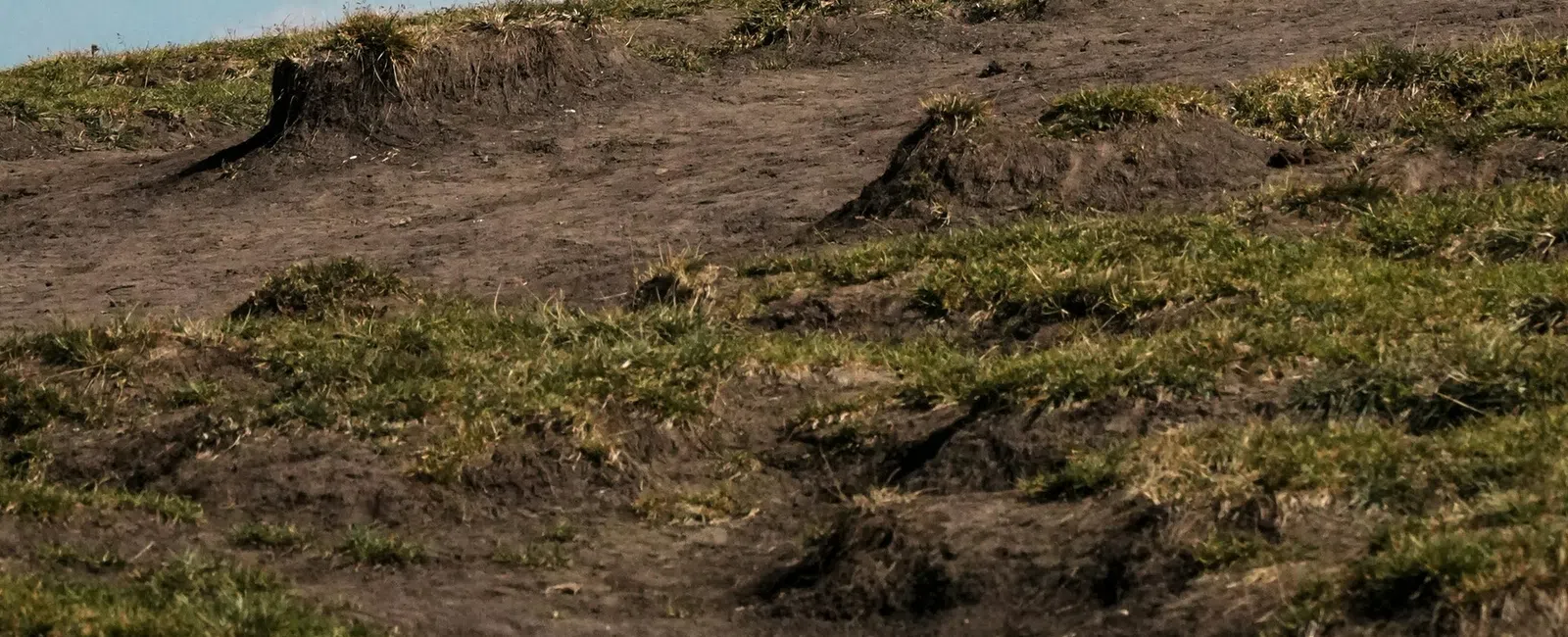
Across Georgia's Piedmont and
much of the Southeast, the ground beneath commercial buildings is not the
stable platform it appears to be. The high-plasticity clay soils that underlie
the region expand when they take on water and contract when they dry out, with enough force to lift, crack, and distort the structures built
on top of them. Expansive soil is among the most costly geologic hazards in the
country, responsible for billions of dollars in structural damage annually,
more than floods, hurricanes, and earthquakes combined in most years.
Expansive soil is dangerous not because it moves, but because it moves unevenly. When one part of a foundation heaves while another stays put, the resulting differential movement fractures masonry, racks door and window frames, and cracks slabs. Understanding why these soils behave the way they do, and how geotechnical engineering identifies and mitigates them, is essential for anyone building on or buying property in the Southeast's clay-rich regions.
What Is Expansive Soil?
Expansive soil is soil
containing clay minerals that undergo significant volume change in response to
changes in moisture content. When these soils absorb water, they swell; when
they dry, they shrink. Soils with high shrink-swell capacity are also called
expansive clays, shrink-swell soils, or, in some regions, fat clays. When shrink-swell behavior is extreme, soils are classified as vertisols and
form deep desiccation cracks in dry seasons.
The volume changes are not
trivial. Expansive soils commonly expand 10 percent or more by volume with
moisture increase, and highly expansive clays can exert swelling pressures
exceeding 20,000 to 30,000 pounds per square foot, far more than enough to lift
and crack a building. Near the ground surface, where seasonal moisture change
is greatest and the confining pressure of overlying soil is lowest, expansion
is most pronounced. Surface heave of several inches is common in expansive soil
regions, and extreme cases can produce a foot or more of vertical movement.
The behavior is fully reversible and repeats indefinitely. A clay that swells during a wet winter will shrink during a dry summer, and the cycle continues year after year. This cyclical movement is what makes expansive soil so damaging over time: a structure may survive the first season intact, only to accumulate distress as the soil beneath it expands and contracts across successive wet and dry cycles. NOVA's geotechnical and forensic engineering teams regularly investigate structures where years of seasonal soil movement have produced progressive, worsening damage.
The Clay Mineralogy Behind Shrink-Swell Behavior
Not all clay soils are
expansive. Shrink-swell behavior comes from specific clay minerals with a crystal structure that lets water molecules enter between the
mineral layers.
Clay minerals are built from
stacked sheets of silica and alumina. They are classified by the ratio of these
sheets: 1:1 clays like kaolinite have matched pairs of sheets held tightly
together, while 2:1 clays have an octahedral sheet sandwiched between two
tetrahedral sheets. The expansive clays, chiefly montmorillonite and the
broader smectite group, have a 2:1 structure with an expanding crystal lattice.
Water molecules are drawn into the space between the layers, forcing them apart
and increasing the volume of the entire soil mass.
Montmorillonite, the most
expansive common clay mineral (and the primary component of bentonite), has an
enormous affinity for water. A sample of pure montmorillonite can expand many
times its original volume. Most natural soils contain far less than 100 percent
expansive minerals, so real-world expansion is more moderate, but even a modest
proportion of montmorillonite or smectite in a soil profile is enough to create
serious shrink-swell potential. Other minerals with significant expansion
potential include vermiculite and, to a lesser degree, illite and chlorite.
Kaolinite, by contrast, is essentially non-expansive.
The practical consequence is that identifying whether a soil is expansive requires knowing not just that clay is present, but what kind of clay and in what proportion. This is a geotechnical laboratory question, not something you can determine by visual inspection in the field.
How Expansive Soil Damages Structures
Expansive soil damages
structures through the differential nature of its movement. Uniform swelling of
an entire building foundation would be far less damaging than the uneven,
edge-to-center and seasonal movement that actually occurs in practice.
The Edge-to-Center Moisture Differential
The most common damage mechanism comes from moisture differences between the perimeter and the interior of a
building. Soil at the edge of a slab or foundation is exposed to seasonal
rainfall, landscape irrigation, and evaporation, so its moisture content, and
therefore its volume, changes with the seasons. Soil beneath the center of the
building is shielded from these influences and stays relatively constant. This
produces a persistent differential: the perimeter heaves and settles seasonally
while the center remains stable, or the center gradually accumulates moisture
over years while the edges cycle. Either pattern imposes differential movement
on the structure.
Damage Patterns
The distress expansive soil
produces is recognizable to experienced engineers:
- Diagonal cracking: Stair-step cracks in masonry walls and diagonal cracks radiating from window and door corners, produced by the racking distortion of differential foundation movement
- Slab cracking and doming: Cracks in slab-on-grade floors, with the center of the slab often domed upward relative to the edges where soil has accumulated moisture beneath the protected interior
- Sticking doors and windows: Frames racked out of square by structural distortion, causing doors and windows to bind or fail to close
- Separation at joints: Gaps opening between walls and ceilings, between slabs and grade beams, and at construction joints as elements move relative to one another
- Exterior distress: Cracked driveways, sidewalks, and pavements; heaving of exterior flatwork; and separation of attached structures like porches and stoops
Because the movement is seasonal and cyclical, expansive soil damage is often progressive. A hairline crack that appears one season widens the next, and cosmetic distress can develop into structural concern over time. When distress is observed in a building on suspected expansive soil, a forensic engineering investigation can determine whether the movement is attributable to expansive soil, whether it is ongoing, and what remediation is warranted.
Identifying Expansive Soil: Laboratory Testing
Because expansive behavior depends on clay mineralogy and moisture conditions that cannot be assessed visually, geotechnical engineers rely on laboratory testing of soil samples collected during the subsurface investigation. Several standardized tests characterize expansion potential.
|
Test |
What It Measures |
What It Tells the Engineer |
|
Atterberg
Limits (ASTM D4318) |
Measures
plasticity index (PI) and liquid limit (LL) |
PI
above 35 indicates high expansion potential; LL above 50 suggests significant
swelling. The most common first-pass screening test |
|
Expansion
Index (ASTM D4829) |
Measures
the expansion index of a remolded, compacted soil specimen under controlled
conditions |
Provides
a standardized single-number indicator of swell potential used in foundation
design decisions |
|
One-Dimensional
Swell (ASTM D4546) |
Measures
swell or collapse of a soil under vertical load as water is added |
Quantifies
percent swell and swell pressure directly, informing structural load and
mitigation design |
|
Clay
Mineralogy Analysis |
Identifies
the specific clay minerals present (montmorillonite, smectite, illite,
kaolinite) |
Confirms
the presence and proportion of the expansive minerals responsible for
shrink-swell behavior |
|
Moisture
Content (ASTM D2216) |
Measures
the in-situ water content of the soil |
Establishes the baseline against which seasonal moisture change and swell potential are evaluated |
The Atterberg limits are typically the first screening indicator: a plasticity index above 35 and a liquid limit above 50 flag a soil as likely expansive and warranting further testing. The expansion index and one-dimensional swell tests then quantify the actual swell potential and swell pressure, which feed directly into foundation design and mitigation decisions. Sampling must capture the soil profile across the full building footprint, because expansive conditions frequently vary across a site, and a single boring can miss a localized expansive zone that later causes distress.
Expansive Soil in the Southeast
The Southeast has significant
expansive soil exposure, concentrated in specific geologic settings that shape
geotechnical practice across NOVA's market.
Georgia Piedmont Residual Clays
The Piedmont region covering
metro Atlanta and much of northern Georgia is underlain by residual soils
formed from the in-place weathering of granite, gneiss, and schist. The upper
portions of these profiles include high-plasticity clays with meaningful shrink-swell
potential. Atlanta's clay soils are a well-known contributor to foundation
distress in the region, and the seasonal moisture cycle of hot, wet summers and
drier winters drives the shrink-swell behavior that damages residential and
commercial structures alike.
Coastal Plain and Piedmont Transitions
Portions of the coastal plain
and the transition zones between physiographic provinces in Georgia and the
Carolinas contain clay strata with variable expansion potential. Site-specific
investigation is essential in these areas because expansive conditions can be
discontinuous, present in one part of a site and absent in another, which
itself contributes to the differential movement that damages structures.
The Moisture Management Challenge
The Southeast's climate compounds the expansive soil problem. Intense seasonal rainfall, extended dry periods, and aggressive vegetation growth that draws moisture from soil around building perimeters all drive the moisture-content swings that trigger shrink-swell movement. Trees planted near foundations are a frequently overlooked contributor, as their root systems extract large volumes of water from expansive clay during dry periods, causing localized shrinkage and settlement.
How Engineers Mitigate Expansive Soil
Expansive soil is manageable when identified before construction and addressed through
appropriate engineering. The mitigation strategy depends on the severity of the
expansion potential, the type of structure, and site constraints.
Moisture Control
Because expansive soil moves only when its moisture content changes, maintaining stable moisture is a key mitigation principle. Proper site grading to direct water away from
foundations, functional gutters and downspouts with extensions, subsurface
drainage, and careful placement of landscaping and irrigation all help
stabilize the moisture regime around a structure. Moisture control alone is
rarely sufficient for highly expansive soils, but it is a component of nearly
every mitigation strategy.
Soil Stabilization
Chemical stabilization, most
commonly lime treatment, directly addresses the clay's expansive behavior.
When lime is mixed into expansive clay, ion exchange reduces the soil's
plasticity and its affinity for water, and longer-term pozzolanic reactions
increase strength and reduce shrink-swell potential. Lime stabilization is a
well-established treatment for expansive Piedmont clays and is covered in more
detail in NOVA's discussion of soil stabilization methods. Cement and other
chemical treatments are used in specific conditions, and laboratory mix-design testing determines the appropriate additive and dosage.
Foundation Design
Where the soil cannot be
economically treated, the foundation is designed to accommodate or bypass the
expansive zone. Options include deep foundations such as drilled shafts that
extend below the zone of seasonal moisture change and are designed with void
space or sleeving to isolate the shaft from uplift; structurally suspended
floor systems that span between deep foundation elements rather than bearing
directly on expansive soil; stiffened mat foundations engineered to tolerate
the differential movement; and moisture barriers that limit water migration
into the soil beneath the structure.
Removal and Replacement
For shallow expansive layers, the most direct approach is sometimes to excavate the expansive material and replace it with non-expansive engineered fill. The feasibility depends on the depth and extent of the expansive zone; deep expansive profiles make full removal impractical, which is when stabilization or foundation design solutions become necessary.
Building on Expansive Soil in the Southeast?NOVA's geotechnical engineers
characterize expansive soils, design foundation and stabilization solutions,
and investigate foundation distress on commercial projects across Georgia,
Florida, North Carolina, and South Carolina. When expansive soil damages a
structure, our forensic engineers determine the cause. Since 1996. Learn more: usanova.com/what-we-do/geotechnical-engineering |