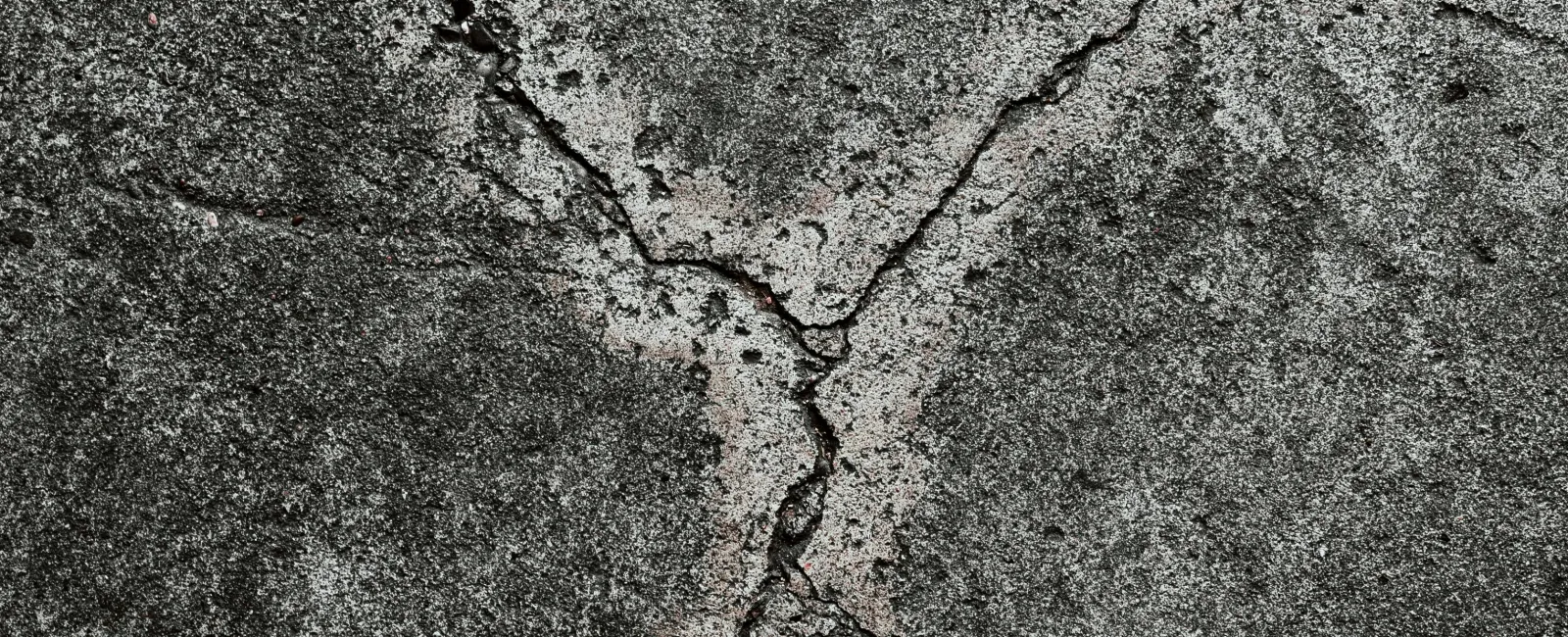
The chips of concrete on the
floor of a parking garage, the rust-stained flaking on a bridge abutment, the
rough, pitted surface of a loading dock slab that started looking fine five
years ago: all of these are concrete spalling. And in every case, the visible
surface damage is a symptom of something happening within or beneath the
concrete itself.
Concrete spalling is one of the most common and consequential deterioration mechanisms affecting commercial and institutional structures.
What Is Concrete Spalling?
Concrete spalling refers to the
breaking away, flaking, chipping, or delamination of concrete from a surface.
It can range from shallow surface scaling affecting only the paste-rich top
layer, to deep spalling that exposes or undercuts embedded reinforcing steel,
to explosive spalling in fire-exposed elements, where internal steam pressure suddenly fractures large sections of concrete.
In engineering contexts,
spalling refers to the separation of material from a surface into thin layers, plates, or irregular fragments. It is distinguished from:
- Cracking: Fractures through the concrete that may or may not result in material loss
- Delamination: Separation of a near-surface layer from the substrate, often without visible surface break initially
- Popouts: Localized conical voids caused by expansive aggregate particles near the surface
- Scaling: Progressive loss of the surface mortar layer, often in thin flakes, typically from freeze-thaw or chemical attack
In practice, multiple forms of deterioration often coexist. A parking deck may show corrosion-induced spalling at column bases, freeze-thaw scaling on the top deck, and delamination at waterproofing membrane interfaces, all on the same structure.
The Six Primary Causes of Concrete Spalling
Concrete does not spall randomly. Each mode of spalling has a specific mechanism, characteristic visual pattern, and implication for structural condition. The table below summarizes the primary causes and their distinguishing features. NOVA's construction materials testing and forensic engineering teams use this diagnostic framework when assessing deteriorating structures.
|
Cause |
Mechanism |
Typical Locations |
Visual Indicators |
|
Corrosion
of Reinforcement |
Water
and chlorides reach embedded steel; rust expands and fractures concrete cover |
Parking
decks, coastal buildings, bridge structures |
Delamination,
map cracking, rust staining, cover loss |
|
Freeze-Thaw
Cycling |
Water
in concrete pores freezes, expands 9%, creates internal tensile stress |
Northern
climates; any structure exposed to moisture and temperature swings |
Surface
pitting, flaking, popouts; progressive layer loss |
|
Alkali-Silica
Reaction (ASR) |
Reactive
silica in aggregates reacts with alkalis in cement paste; gel absorbs water
and expands |
Long-term;
common in older structures with reactive aggregates |
Map
cracking, gel deposits, large-scale surface pattern cracking |
|
Fire
Damage |
Rapid
thermal gradient causes explosive spalling; moisture converts to steam,
fractures concrete |
Any
structure exposed to fire or extreme heat |
Deep
spalling, exposed rebar, loss of section; structural capacity reduction |
|
Poor
Construction Practice |
Low w/c
ratio, inadequate cover depth, improper curing, premature loading |
Any age
structure; often apparent within first years of service |
Surface
scaling, early delamination, inadequate strength at break |
|
Chemical
Attack |
Acids,
sulfates, chlorides, carbonation degrade the cement paste matrix |
Industrial
facilities, wastewater structures, coastal exposure |
Progressive surface loss, soft or friable concrete, discoloration |
1. Corrosion of Embedded Reinforcement
By volume, corrosion-induced
spalling is the most consequential deterioration mechanism affecting reinforced
concrete structures in commercial practice. When chlorides or carbonation
penetrate the concrete cover and reach the embedded reinforcing steel, the
steel begins to corrode. Rust products occupy three to six times the volume of
the original steel, generating expansive pressure within the surrounding
concrete. That pressure fractures the cover concrete, producing the
characteristic delamination and spalling pattern seen on parking decks, coastal
structures, and bridge elements.
The critical insight is that
visible spalling represents a late stage of a process that began years or
decades earlier. By the time concrete is falling, the steel beneath has already
lost significant section area, and the structural capacity of the affected
members may be meaningfully reduced. This is why a forensic condition
assessment on a spalling parking structure is not just an aesthetic exercise;
it is a structural engineering investigation.
2. Freeze-Thaw Cycling
Concrete is porous. Water that
enters the pore network and freezes expands by approximately 9 percent, generating internal tensile stress that the concrete must resist. In
climates with repeated freeze-thaw cycles, this cyclic expansion and
contraction progressively fractures the cement paste-aggregate bond at the surface, producing the characteristic pitting, flaking, and pop-out pattern of
freeze-thaw damage.
Air entrainment, achieved
with air-entraining admixtures, provides microscopic voids within
the concrete matrix that accommodate ice expansion and dramatically improve
freeze-thaw resistance. Concrete placed without adequate air entrainment in
freeze-thaw-exposed environments is significantly more susceptible to surface
scaling. Poor curing, finishing too early while bleed water is present, and
excessive water-to-cement ratio all increase freeze-thaw vulnerability.
3. Alkali-Silica Reaction (ASR)
Alkali-silica reaction is a
chemical deterioration mechanism in which reactive silica minerals in certain
aggregates react with alkalis in the cement paste to form a hygroscopic gel.
This gel absorbs water from the surrounding concrete and expands, generating
internal pressure that produces characteristic map cracking (also called
crazing or alligator cracking) and, at advanced stages, surface spalling and
extrusion of gel at crack faces.
ASR develops slowly, often over
decades, and is most commonly observed in older structures. Diagnosis requires
petrographic examination of concrete cores by a specialist laboratory; the map
cracking pattern alone is insufficient for definitive identification, as other mechanisms can produce similar surface patterns.
4. Fire Damage
Concrete exposed to fire
undergoes rapid deterioration through multiple mechanisms. The thermal gradient
between the hot surface and cooler interior generates tensile stresses that
fracture the outer layers. Moisture within the concrete rapidly converts to steam, and if the steam cannot escape quickly enough through the pore network, it builds pressure that can cause explosive spalling. High-strength, low-permeability concrete is particularly susceptible to explosive fire spalling because its dense pore structure traps steam more effectively than that of normal-strength concrete.
Post-fire forensic structural assessment of concrete
members must evaluate not only surface spalling but also the depth to which thermal damage has altered the concrete's mechanical properties and the extent to which reinforcing steel has been heated above its yield strength. These
assessments require sampling, laboratory testing, and structural analysis to
determine whether fire-affected members retain adequate load capacity.
5. Poor Construction Practice
Construction deficiencies are a
significant and frequently underappreciated cause of premature concrete
spalling. The most common include:
- Excessive water-to-cement ratio: Adding water to improve workability reduces compressive strength, increases permeability, and leaves large capillary voids that accelerate deterioration
- Inadequate concrete cover: Insufficient cover depth over reinforcement reduces the time for chlorides and carbonation to reach the steel, accelerating corrosion initiation
- Premature finishing: Finishing while bleed water is still present traps water beneath the surface skin, creating a weak, permeable layer vulnerable to freeze-thaw and surface spalling
- Improper curing: Insufficient curing time or inadequate moisture retention produces a weak, permeable surface that deteriorates rapidly
- Inadequate air entrainment: Omitting or under-dosing air-entraining admixtures in freeze-thaw-exposed concrete significantly reduces surface durability
When spalling appears within the
first few years of a structure's service life, construction deficiencies are
often the primary cause. These cases frequently lead to construction defect
investigations that require forensic engineering analysis to determine whether the deterioration resulted from design specification errors, material substitutions, or installation failures.
6. Chemical Attack
Certain chemical environments aggressively degrade the concrete matrix. Sulfate attack from soil or groundwater, acid attack from industrial processes or biological activity in wastewater structures, and chloride penetration in marine environments all progressively dissolve or disrupt the cement paste, weakening the concrete and creating conditions for surface spalling. The Southeast's coastal markets, particularly in Florida and along the Carolina coast, present particularly aggressive chemical exposure environments for concrete structures.
When Concrete Spalling Is a Structural Concern, Not Just a Cosmetic Issue
The most important judgment in
evaluating spalling concrete is distinguishing between surface deterioration
that is cosmetically objectionable and structurally benign, and deterioration
that indicates loss of structural capacity or acceleration of a failure
mechanism.
Surface scaling from freeze-thaw
on a non-structural slab is a maintenance issue. Corrosion-induced spalling on
a parking deck beam soffit, with exposed and section-reduced reinforcement, is
a structural engineering concern that requires immediate evaluation and may
require load restrictions, shoring, or emergency repair.
The factors that elevate
spalling from cosmetic to structural concern include:
- Exposed, section-reduced, or debonded reinforcing steel
- Spalling on load-bearing members: beams, columns, walls, slabs in spans
- Deep spalling that affects more than the cover depth of the concrete
- Active delamination with hollow sound response across large areas
- Rapid progression since the last inspection
- Evidence of structural distress concurrent with spalling: deflection, cracking at connections, misalignment
Any of these indicators warrants engagement of a licensed structural or forensic engineer for a professional condition assessment. NOVA's forensic engineering team performs structural condition assessments on spalling concrete structures across the Southeast, providing engineering-based findings that property owners, asset managers, and legal counsel can rely on for repair decisions, insurance claims, and litigation support.
Concrete Spalling in the Southeast: Regional Factors
The Southeast's climate and
construction environment create specific drivers of concrete spalling that
differ meaningfully from northern markets.
Chloride Exposure in Coastal Markets
Florida and the coastal markets
of Georgia, South Carolina, and North Carolina expose concrete structures to
airborne and direct chloride from seawater and salt air. Reinforced concrete in
these environments faces significantly accelerated corrosion initiation
compared to inland sites. Structures built before modern understanding of
chloride-induced corrosion and cover depth requirements are particularly
vulnerable, and the inventory of aging parking structures in markets like
Miami, Fort Lauderdale, Charleston, and Wilmington reflects this exposure
history.
High Humidity and Temperature Cycling
The Southeast's hot, humid
climate accelerates carbonation of concrete surfaces, reducing the concrete's pH and removing the passive protection provided by embedded reinforcement.
Combined with the warm temperatures that accelerate chemical reaction rates,
carbonation-induced corrosion can progress faster in the Southeast than in more
temperate climates.
Aggressive Soils and Groundwater
The Southeast includes
significant areas of aggressive geochemistry, including sulfate-bearing soils
and groundwater in parts of Georgia and Florida, and chloride-bearing
groundwater in coastal areas. Geotechnical investigations that characterize
soil and groundwater chemistry are an important input to the design of concrete
foundations and below-grade structures in these areas, because inadequate
sulfate resistance in the mix design can lead to deterioration that eventually manifests as spalling and structural degradation.
Older Parking Structure Inventory
Atlanta, Charlotte, and Florida's major markets have large inventories of reinforced concrete parking structures built in the 1970s through the 1990s, many of which are approaching or exceeding their design service life. These structures were frequently designed with cover depths and waterproofing systems that are less robust than current standards. Corrosion-induced spalling is endemic in this inventory, and condition assessments and repair programs are a significant and growing part of NOVA's forensic engineering practice across the Southeast.
The Role of Construction Materials Testing in Diagnosing Spalling
Visual observation tells you
where spalling is occurring and what pattern it follows. Laboratory testing
tells you why. NOVA's AASHTO-accredited construction materials testing
laboratories provide the analytical support needed for accurate spalling
diagnosis:
- Petrographic analysis: Microscopic examination of concrete cores by a petrographer can identify ASR, freeze-thaw damage, carbonation depth, and construction defects such as improper finishing or inadequate curing
- Chloride profile testing: Chloride content measured at multiple depths from the concrete surface allows engineers to calculate the rate of chloride ingress and estimate the time to corrosion initiation at the reinforcement depth
- Carbonation depth: Phenolphthalein indicator testing of freshly fractured cores reveals how deeply carbonation has penetrated and whether it has reached the reinforcement
- Half-cell potential survey: Electrochemical measurement of reinforcement potential mapped across a deck surface identifies areas of active corrosion before spalling is visible
- Compressive strength testing: Core compressive strengths compared to the specified design strength reveal whether the concrete met specification at placement and whether deterioration has reduced its load-carrying capacity
- Cover depth measurement: Ground-penetrating radar or covermeter surveys map reinforcement depth across a structure, identifying zones of inadequate cover that are most vulnerable to accelerated deterioration
Seeing Spalling on a Commercial Property?NOVA's forensic engineers and
construction materials testing teams have assessed concrete spalling on
parking structures, commercial buildings, and infrastructure projects across
Georgia, Florida, North Carolina, and South Carolina since 1996. We can determine
the cause, quantify the extent, and scope the right repair. Learn more: usanova.com/what-we-do/forensic-engineering |