
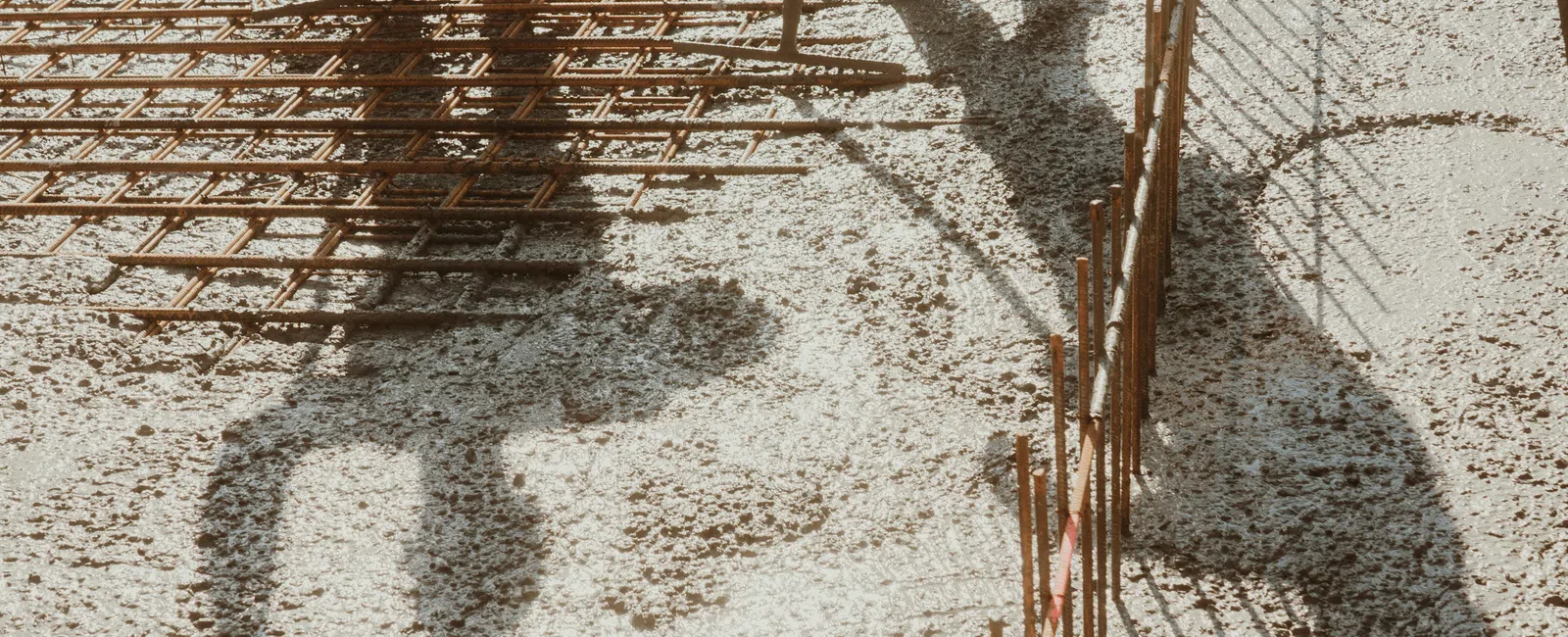
Excess moisture in a concrete slab
is the leading cause of flooring failures. When you install flooring over a slab that hasn't dried enough, the damage shows up months later: adhesive that lets
go, tile that lifts, wood that cups, coatings that blister, and mold growing
out of sight beneath the surface. By then, the fix means tearing out the new
floor and starting over.
Concrete moisture testing catches
the problem before you install flooring, while it is still inexpensive to fix. Every slab holds water: concrete is placed wet and releases moisture as
it cures, and slabs on grade can keep drawing moisture from the ground for
years. Testing tells you whether a slab is dry enough for the specific floor
going over it.
Why Concrete Moisture Testing
Matters
Flooring and coating manufacturers
set moisture limits for their products and tie their warranties to those
limits. If you install over a slab that exceeds them, the failure isn't covered.
The most common moisture-related failures are:
- Adhesive failure: the bond breaks down, and tile or sheet goods lift, curl, or shift
- Blistering and delamination: coatings and resinous floors bubble and peel away
- Cupping and buckling: wood flooring absorbs moisture and deforms
- Mold and odor: trapped moisture feeds microbial growth under the floor
- pH damage: rising moisture carries alkalinity to the surface that attacks adhesives
|
Key
point: Moisture is the single most
common cause of flooring failure, and most flooring warranties are void
without documented moisture testing that meets the manufacturer's limits. |
How Concrete Moisture Is Tested
No single reading tells the whole
story, so testing focuses on how much moisture is inside the slab and how fast
it is leaving. Three methods dominate commercial work.
|
Method |
What It Measures |
ASTM Standard |
|
Relative humidity (in-situ
probe) |
Moisture deep inside the slab,
at 40 percent of its depth |
ASTM F2170 |
|
Calcium chloride (MVER) |
Moisture vapor leaving the
surface over 72 hours |
ASTM F1869 |
|
Electrical resistance or
impedance meter |
Relative surface moisture, for
screening only |
ASTM F2659 |
The relative humidity test has
become the method of record on most commercial projects. A surface reading
alone can look dry while the slab below is still wet, so the in-situ RH probe
measures conditions inside the slab, which is a far better predictor of how the
finished floor will perform.
What Counts as Dry Enough
No universal pass-or-fail number exists. The threshold comes from the flooring or coating manufacturer, not the
testing firm, and it is written into the product's installation requirements.
Limits are usually expressed as:
- A maximum relative humidity, often in the range of 75 to 85 percent for many resilient and wood products
- A maximum vapor emission rate, measured in pounds of moisture per 1,000 square feet over 24 hours
- A surface pH range, since high alkalinity damages many flooring adhesives
The testing firm measures the slab
and reports the results against the specific product's limits. The general
contractor and flooring installer then decide whether to proceed, allow more
drying time, or apply a moisture mitigation system.
How the Testing Process Works
On a commercial project, the
sequence is consistent:
- Condition the space. Bring the building to service temperature and humidity, because slab readings depend on surrounding conditions.
- Place the tests. Standards call for a set number of locations, typically three for the first 1,000 square feet and one for each additional 1,000, spread to catch the wettest areas.
- Let the probes equilibrate. In-situ RH probes need time set into the slab, generally 24 hours, before they give a valid reading.
- Record and compare. Document results and compare them against the flooring manufacturer's limits.
- Decide. If the slab is within limits, the team proceeds with flooring. If not, the team allows more drying or installs a moisture mitigation system.
What Causes High Slab Moisture
When a slab tests high, the cause
usually traces to one of a few conditions:
- A slab that is still young, releasing water left from mixing and curing
- A missing or damaged vapor retarder beneath a slab on grade
- A high water table or poor site drainage feeding moisture from below
Plumbing leaks or water intrusion can also add moisture after the
slab is placed, which is why moisture problems often overlap with building
enclosure and drainage issues.
Who Should Perform Concrete
Moisture Testing
Moisture testing has real consequences for the schedule and for warranty coverage, which is why it belongs with an independent testing firm rather than the flooring installer, who has an interest in proceeding. NOVA performs concrete moisture testing as part of its construction materials testing services, with AASHTO-accredited laboratories and technicians who follow the ASTM methods and report results the flooring and design teams can rely on. When a floor has already failed, our forensic engineering team can determine whether slab moisture was the cause.
Test Before You Install, Not After You FailNOVA's AASHTO-accredited teams
perform concrete moisture testing to ASTM standards across Georgia, Florida,
North Carolina, and South Carolina, giving flooring and design teams the
documentation they need to install with confidence. Bring us in before the
floor goes down. Contact NOVA Engineering 770.425.0777 |