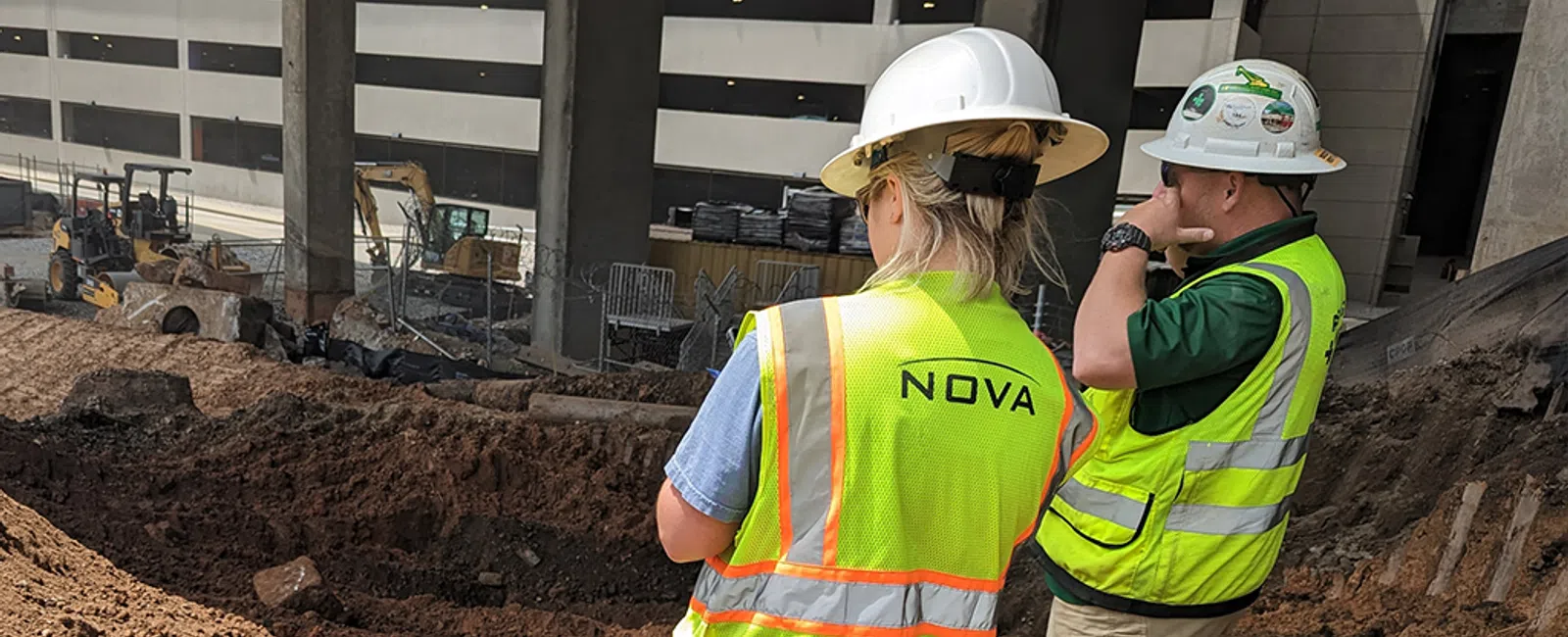
When environmental site assessments reveal contaminated soil, the next question is straightforward: What happens now? Soil remediation is the process of removing, treating, or containing contaminants in soil, which becomes necessary to protect human health, restore property value, and satisfy regulatory requirements before development can proceed.
At NOVA Engineering and Environmental, our environmental consulting team has guided property owners, developers, and municipalities through contaminated soil remediation projects across the Southeast since 1996. Understanding the available soil remediation methods helps stakeholders make informed decisions about cleanup approaches, timelines, and costs.
What Is Soil Remediation?
Soil remediation refers to the techniques and processes used to remove, reduce, or neutralize contaminants in soil. The goal is restoring soil to a condition that's safe for its intended use, whether that's residential development, commercial construction, or ecological preservation.
Contamination requiring remediation typically results from historical industrial activities, underground storage tank leaks, improper waste disposal, or chemical spills. Common contaminants include petroleum hydrocarbons from fuel storage and auto repair facilities, heavy metals (lead, arsenic, chromium) from manufacturing and industrial processes, chlorinated solvents from dry-cleaning and degreasing operations, pesticides from agricultural applications, and polycyclic aromatic hydrocarbons (PAHs) from coal-tar and creosote operations.
The appropriate remediation approach depends on several factors: contaminant type and concentration, soil characteristics, depth of contamination, groundwater conditions, site access, future land use, regulatory requirements, and budget constraints. Our environmental consultants evaluate these factors to recommend the most effective and cost-efficient cleanup strategy.
Common Soil Remediation Methods
Soil remediation techniques fall into three broad categories: removal and disposal, in-situ treatment (treating soil in place), and ex-situ treatment (excavating soil for treatment elsewhere). Each approach has advantages depending on site conditions and contamination characteristics.
Excavation and Disposal
The most straightforward method for contaminated soil removal involves excavating the affected soil and transporting it to a licensed disposal facility. This approach works well for relatively small volumes of contamination with clearly defined boundaries. Excavation provides certainty; contaminated material is physically removed from the site.
However, excavation costs increase significantly with depth and volume. Disposal fees depend on contaminant concentrations, with hazardous waste disposal costing substantially more than non-hazardous disposal. For large-scale contamination, excavation may be prohibitively expensive. Additionally, excavation requires managing logistics, including traffic, dust control, and backfill material, which add to project complexity and cost.
Bioremediation
Bioremediation harnesses naturally occurring microorganisms to break down organic contaminants, such as petroleum hydrocarbons. By optimizing conditions for microbial activity, adjusting oxygen levels, moisture, nutrients, and temperature, bioremediation accelerates natural degradation processes.
In-situ bioremediation treats soil in place, minimizing disturbance and costs. Enhanced bioremediation may involve injecting oxygen, nutrients, or specialized microbial cultures to speed the process. This method is particularly effective for petroleum-contaminated sites and works well in permeable soils where amendments can be distributed effectively. Treatment timeframes typically range from months to several years, depending on contamination levels and site conditions, making bioremediation best suited for projects with extended timelines.
Chemical Oxidation and Reduction
Chemical treatment introduces reactive agents that transform contaminants into less harmful compounds. In-situ chemical oxidation (ISCO) injects oxidizing agents like permanganate, persulfate, or hydrogen peroxide to break down organic contaminants. Chemical reduction uses reducing agents to treat contaminants such as chlorinated solvents and certain metals.
Chemical treatment can achieve rapid results compared to biological methods, making it attractive when faster cleanup timelines are required. However, the approach requires careful design to ensure proper reagent distribution and avoid unintended reactions with soil minerals.
Soil Vapor Extraction
For volatile contaminants in the unsaturated zone (above the water table), soil vapor extraction (SVE) removes contamination by applying a vacuum to extraction wells. The vacuum draws air through contaminated soil, volatilizing contaminants that are then captured and treated at the surface.
SVE is most effective for volatile organic compounds (VOCs) in permeable soils. The method can remediate large areas cost-effectively but requires months to years of operation, depending on the extent of contamination. SVE systems are often combined with other technologies, such as air sparging below the water table, to address contamination across multiple soil zones simultaneously.
Stabilization and Solidification
When contaminant removal isn't practical, stabilization immobilizes contaminants in place to prevent migration. This approach mixes binding agents, cement, ite silicates, or proprietary additives with contaminated soil to encapsulate contaminants and reduce their mobility and bioavailability.
Stabilization is commonly used for heavy metal contamination where destruction isn't possible. The treated soil remains on-site but no longer poses the same environmental or health risks. This method requires long-term monitoring to verify continued effectiveness.
Thermal Treatment
High-temperature treatment destroys organic contaminants through incineration or thermal desorption. Thermal desorption heats soil to volatilize contaminants, which are then captured and treated. Full incineration destroys contaminants completely but is typically reserved for highly contaminated materials.
Thermal methods provide definitive treatment but involve significant energy costs and may require excavation and transport to treatment facilities. Mobile thermal treatment units can process soil on-site for larger projects, reducing transportation costs while maintaining treatment effectiveness.
Selecting the Right Remediation Approach
Choosing among soil remediation techniques requires balancing effectiveness, cost, timeline, and site constraints. Our environmental consulting services include feasibility studies that evaluate remediation alternatives based on site-specific conditions.
Key considerations include contaminant characteristics (petroleum responds well to bioremediation; metals typically require stabilization or removal), soil type (clay soils limit chemical and biological treatment effectiveness), contamination depth (shallow contamination may favor excavation; deep contamination often requires in-situ methods), and timeline requirements (some projects can accommodate longer treatment periods while others need rapid cleanup).
Regulatory requirements also influence method selection. State environmental agencies may have approved remedy lists or preferred approaches for certain contaminant types. In the Southeast, state programs in Georgia, Florida, North Carolina, and South Carolina each have specific requirements for demonstrating cleanup completion. Engaging regulators early helps ensure selected methods will achieve regulatory closure and avoid costly mid-project changes.
The Soil Remediation Process
Successful ground remediation follows a systematic process that begins well before any treatment activities start.
- Site Characterization: Before remediation design, a thorough investigation defines the extent of contamination, horizontally, vertically, and by concentration. This data drives remediation design and cost estimates. Inadequate characterization leads to surprises during cleanup.
- Feasibility Evaluation: Based on characterization data, environmental professionals evaluate applicable remediation technologies, develop preliminary designs and cost estimates for viable alternatives, and assess the feasibility of each alternative.
- Remediation Design: The selected approach is developed into detailed design documents specifying equipment, procedures, monitoring requirements, and performance criteria. Regulatory agency approval may be required before implementation.
- Implementation: Remediation activities proceed according to the approved design, with ongoing monitoring to verify performance and guide adjustments as needed.
- Confirmation and Closure: Upon achieving cleanup goals, confirmation sampling demonstrates that remediation objectives have been met. Regulatory agencies review results and issue closure documentation.
When Is Soil Remediation Required?
Contaminated soil treatment becomes necessary under several circumstances. Regulatory enforcement may require cleanup when contamination is discovered during property transactions, reported releases, or agency inspections. Federal and state environmental laws impose cleanup obligations on responsible parties, and failure to address known contamination can result in penalties and enforcement actions.
Property transactions often necessitate remediation when Phase I and Phase II environmental site assessments identify contamination that affects property value or intended use. Lenders typically require environmental issues to be resolved before financing closes, and buyers may negotiate remediation as a condition of purchase or seek price adjustments to account for cleanup costs. Working with experienced environmental assessment and remediation professionals helps buyers understand their options and negotiate effectively.
Development projects may require remediation to satisfy lender requirements, obtain building permits, or address liability concerns before construction. Many municipalities will not issue permits for sites with known contamination until cleanup plans are approved and implemented. Voluntary cleanup programs in many states provide frameworks for proactively addressing contamination, often with liability protections upon completion that make properties more attractive for redevelopment.
Working with Environmental Professionals
Soil remediation projects require expertise spanning investigation, design, regulatory navigation, and construction oversight. Engaging qualified environmental consulting professionals ensures projects are properly scoped, efficiently executed, and achieve regulatory closure.
Since 1996, NOVA Engineering and Environmental has helped clients throughout the Southeast address contaminated soil challenges. From initial assessment through remediation design and construction oversight, our licensed professionals provide the technical expertise and regulatory experience to restore your site efficiently. When soil contamination stands between you and your project goals, trust the environmental team that understands both the science and the process.